


Opuscula.
Rome, J. Besicken 1503.
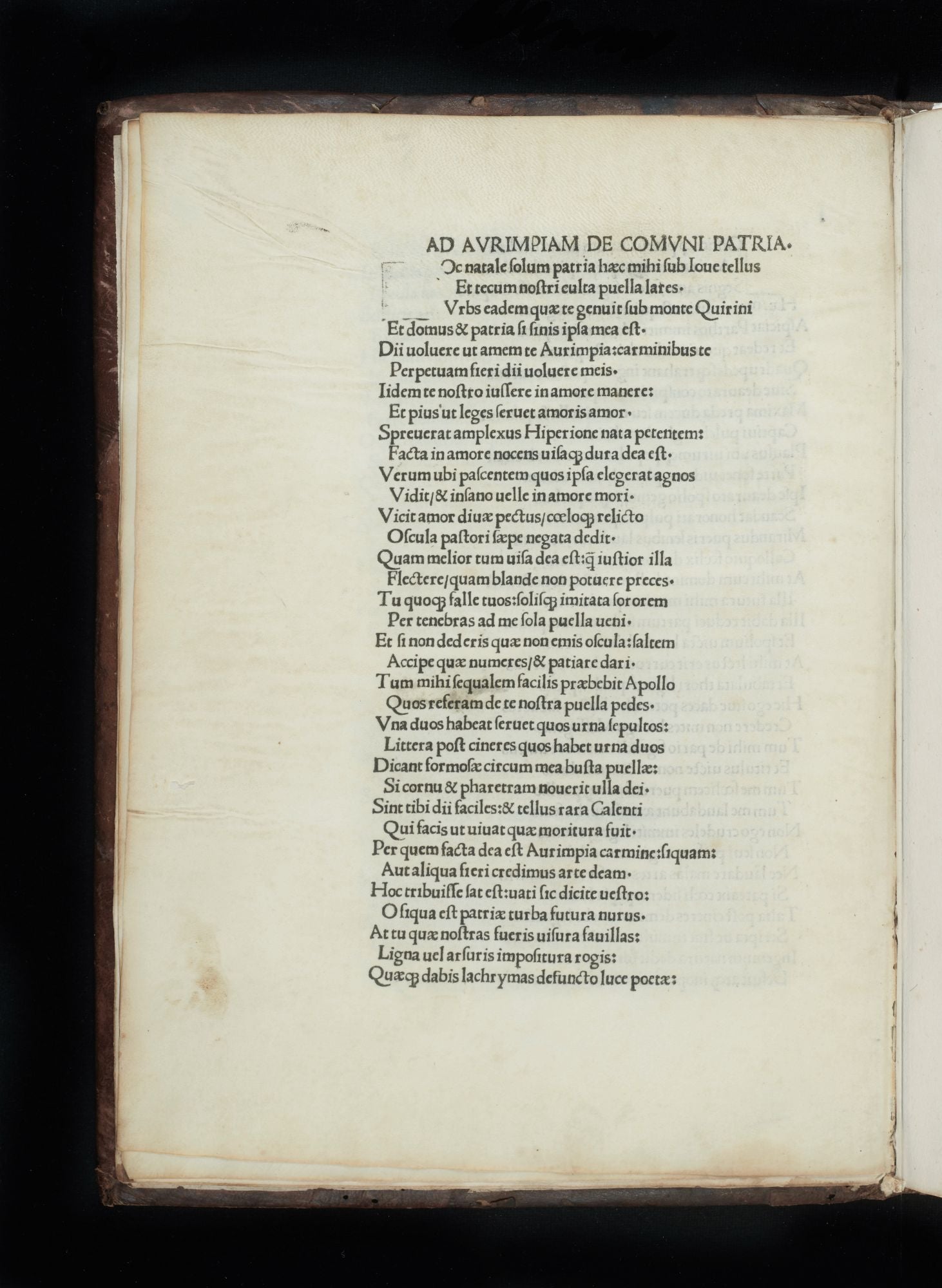
Folio (280 x 148 mm.). [ii], [106], [48], [12], [23], [1 blank], [26]p. Roman type, three-line white-line floriated woodcut initials. THE TWO OUTER BIFOLIA OF THE FIRST QUIRE ARE PRINTED ON VELLUM.
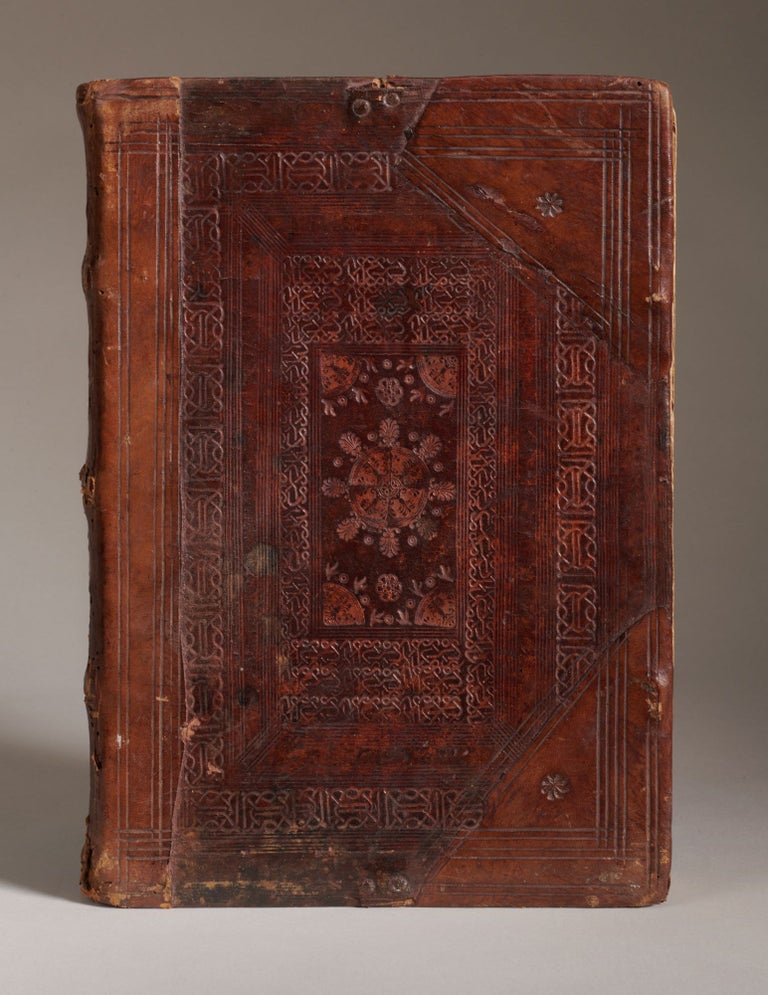
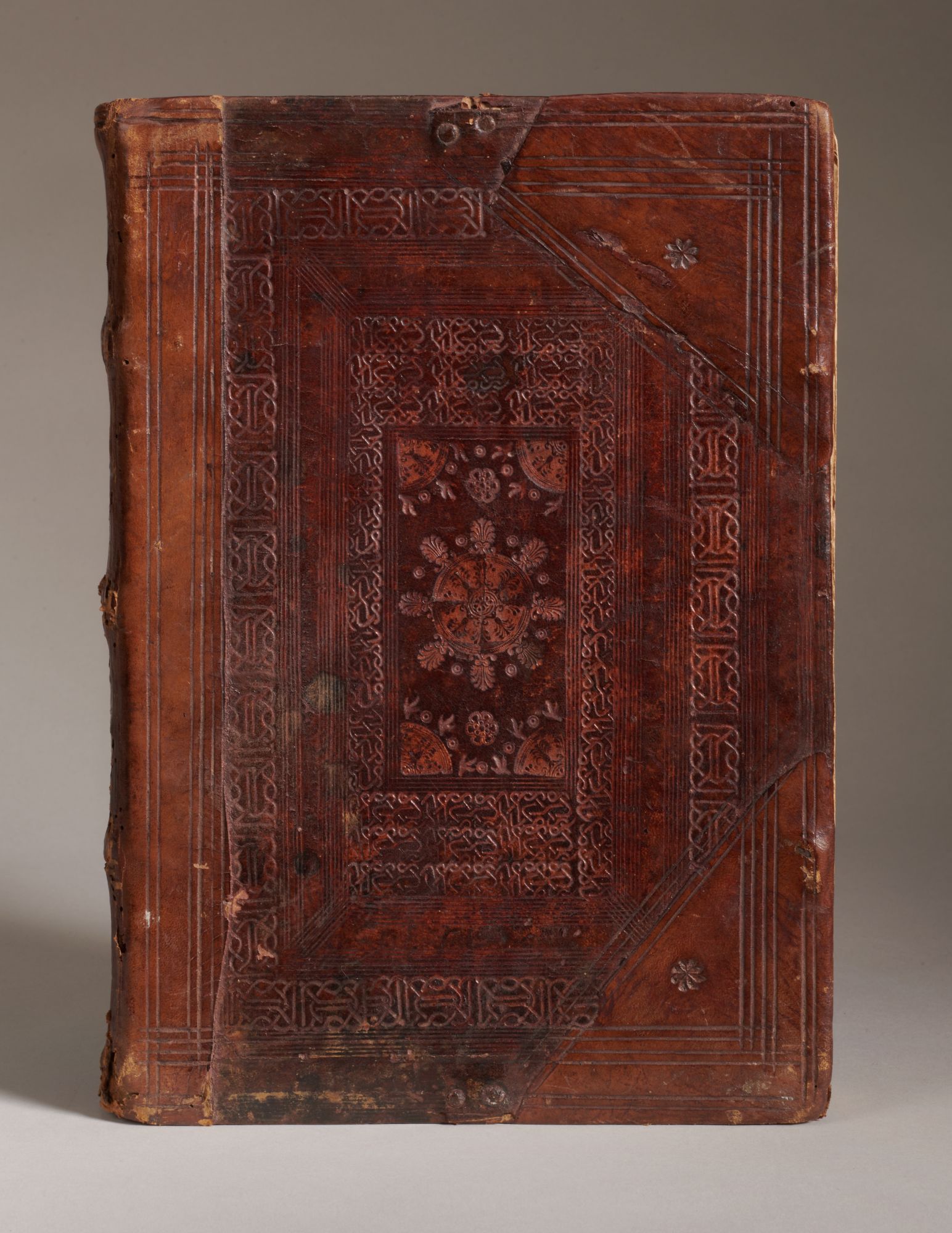
Contemporary Roman blind-tooled and red-painted calf over beveled wooden boards, ropework stamps, palm leaves, circles, flames, trefoils, daisies and a foliage fan decorate the panels; four repoussé brass catches (clasps gone, late 17th-century repairs to the four outer corners, panels and spine slightly wormed).
Only Edition. These poems and prose pieces represent the brilliant Aragonese court culture in Naples. Calenzio was King Federico’s tutor then became his trusted diplomat and treasurer.
After the author’s death, his son Lucio enlisted a family friend, the humanist poet and collector Angelo Colocci (1474-1549), to shepherd his father’s works through the press. As editor, Colocci radically intervened, often rewriting entire passages. He did not, however, suppress the author’s obscene poems, licentious letters, scandalous fable (Cineus and Philaeus retold) or erotic epigrams. (Some transgressive words have been censored by a later hand.) Other works include orations on the fall of Constantinople, royal epithalamia, his frequently reprinted translation of the Battle of the Frogs and Mice and amorous autobiographical verses. CALENZIO GIVES THE EARLIEST EXPLICIT ACCOUNT OF THE FIRST SUCCESSFUL PLASTIC SURGERIES (f. [63v]). Apparently at the last minute, Colocci canceled one piece promised on the title (Satyra ad Longum), likely unwilling to face the repercussions.
Intimate with book production, Colocci also worked with Besicken on two collections of vernacular sonnets and songs and, from 1516, hosted the Greek College in Rome, housed its press and oversaw its production. This folio’s unusual quiring scheme may reflect chaotic text preparation and stop-press corrections. Indeed, Colocci emended this in three places by hand. The woodcut initials on the four vellum leaves were masked out for later illumination.
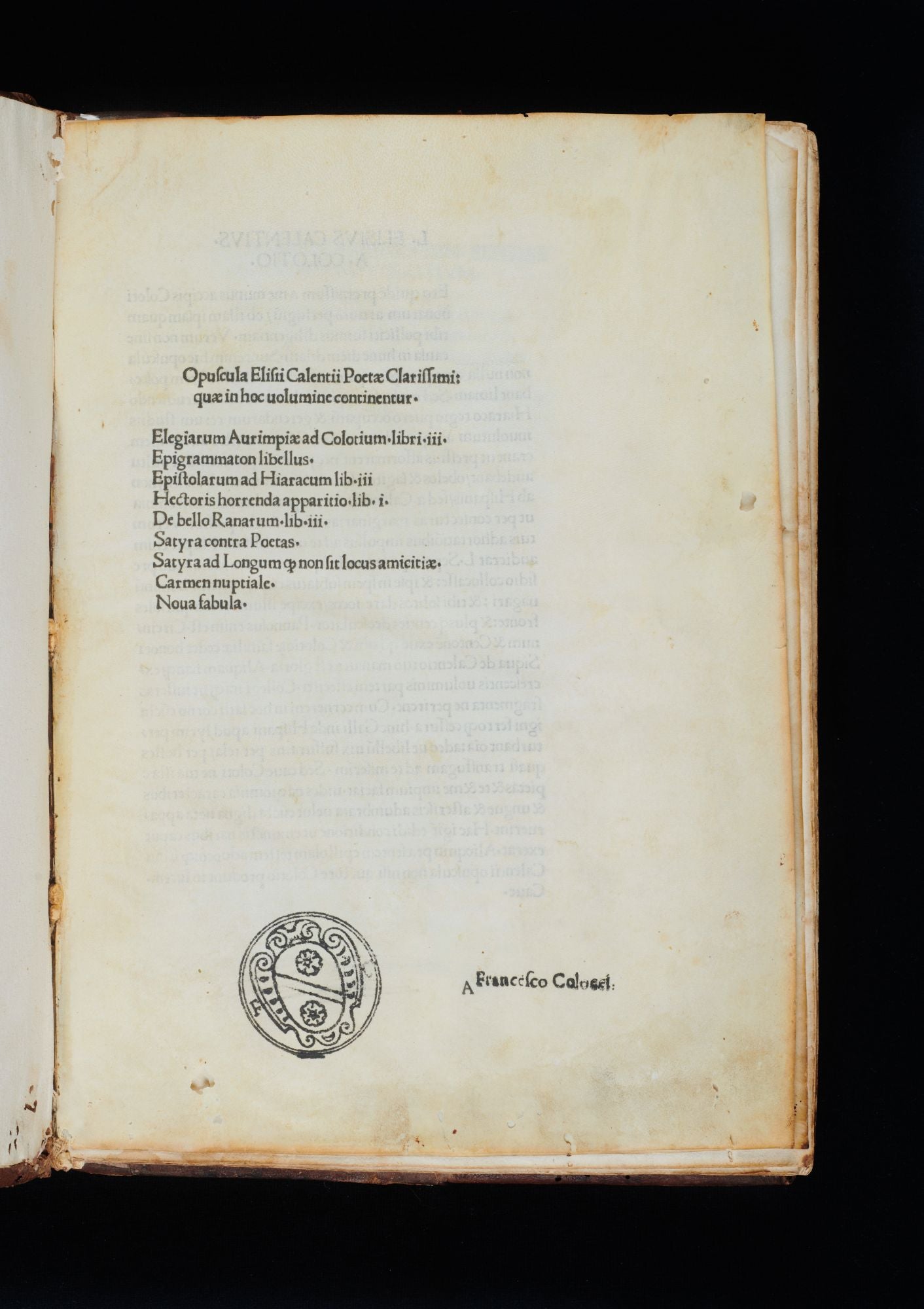
This copy survived the disastrous looting of Colocci’s library during the 1527 Sack of Rome and remained in the family until after 1600. The title bears two stamps, one of the Colocci arms and the other of Francesco Colocci (fl. C16/17). Some foxing and a few margins slightly stained. A marvelous copy. My thanks to Dott. Marco Bernardi.
¶Bernardi, “Per la ricostruzione della Biblioteca colocciana: Lo stato dei lavori” in Angelo Colocci e gli studi romanzi edd. Bologna & Bernardi 21-83; Calenzio, Guerra della ranocchie: Croaca edizione critica ed. Monti Sabia (2008) passim; Lattès, “Studi letterari e filologici di Angelo Colocci” and Campana, “Angelo Colocci conservatore ed editore di letteratura umanistica” in Atti del Convegno di studi su Angelo Colocci Jesi 13-14.IX.1969 (1972) 243-55, 257-72 & 268-9,3; Gnudi, The Life and Times of Gaspare Tagliacozzi Surgeon of Bologna 110-2, 282 & 492,48.
Sold
Status: On Hold